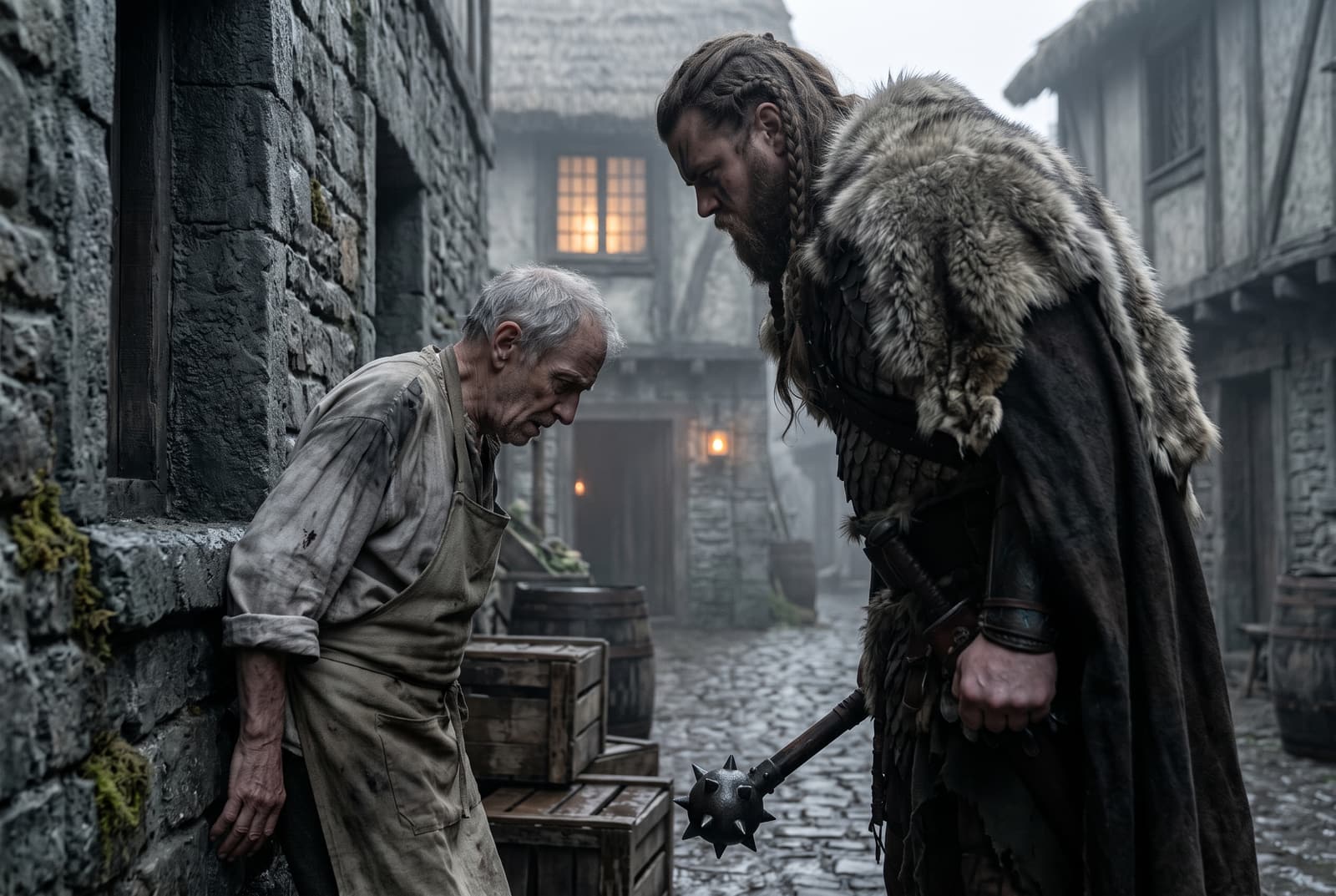
Yorrick broke before they'd even finished asking. They'd come back to the mill with Ilsabet's writ still warm in their pockets and the memory of that deliberately swapped gear fresh enough to make politeness feel like a waste of time. It didn't take much — a question about who profits from a silent mill, maybe, or just four strangers standing in his doorway who plainly already knew he was lying. The miller's excuses ran out all at once. An investor, he said, someone he'd never met in daylight, had paid him well to keep the mill quiet a little longer, no questions, no permanence, just stopped — and he'd taken the coin plainly, without much shame about it. He wanted out of Millstead, he said, more than once, the way a man says a thing he's rehearsed for the day he finally has enough put aside to leave — and this was simply money he wanted, offered by someone who was never going to ask twice. He didn't know a name. He knew a meeting place: a hideout somewhere on the old road, roughly halfway between Millstead and Thornhallow, where the people who'd paid him kept whatever else they were keeping.
Some ways down that same road, they found a use for the rest of the afternoon. Wendell Merrick — the field hand who'd walked them into Millstead their first day — was fighting a losing battle with a wagon wheel that had given out on him halfway through a load, and Orion had it seated true again before Wendell had even finished explaining what happened. Gratitude loosened his tongue. Orion asked first, plainly, whether anyone in these parts dealt in magic or fine engineering — anything worth the detour. Wendell allowed that adventurers passed through now and then with gear finer than anything Millstead traded in, but pointed them past his own town for more of it: follow the money, he said, and the money in Karrowmoor led to a man named Emeric Sauvane. Wendell had never met him himself, only seen his cart pass — a fine one — and knew him only as a benefactor the valleys were grateful for. If anyone traded in magic items or riches worth an adventurer's notice, Wendell said, Sauvane was who to ask.
Someone else asked next, more bluntly — witches, dark magic, wizards, anything of that sort in these parts — and Wendell laughed, an honest laugh, at the word witch. That was just the young folk talking, he said; they'd hang that word on anyone strange enough to save themselves the trouble of a better one. The woman they meant was nothing of the kind — a kindly old healer, that was all, who'd lived alone in the woods by a stream out past Seamfall for as long as anyone in the valley could remember. He gave up her name as easily as he'd give up a neighbor's — Ysolde Karn — and only caught himself, just slightly, on for as long as anyone could remember, as though he'd heard the words leave his own mouth and found them a little stranger than he'd meant them to sound.
Back at Leon's that evening, Edric took up his bagpipes by the hearth, and for a while the inn was warmer for it — even the wariest regulars found themselves humming along, and Leon refilled cups a little more freely than usual. It was in that loosened mood that a patron down from Thornhallow mentioned the wall almost as an aside, a few drinks into an easy conversation: the ground under it hadn't just settled, it had opened, a proper sinkhole, and a crew of dwarven masons had already been through once to shore it back up before it went right back to failing. He said it the way people say things about bad roads and bad luck — nothing more sinister in his voice than a man complaining about the weather. Leon, for his part, was prouder of his cellar than cautious about his customers, and the bottle he poured from Sauvane Vineyards put a second name to the one Wendell had already given them — Emeric Sauvane, a vintner well‑off enough, and well‑liked enough, to count as something of a local celebrity.
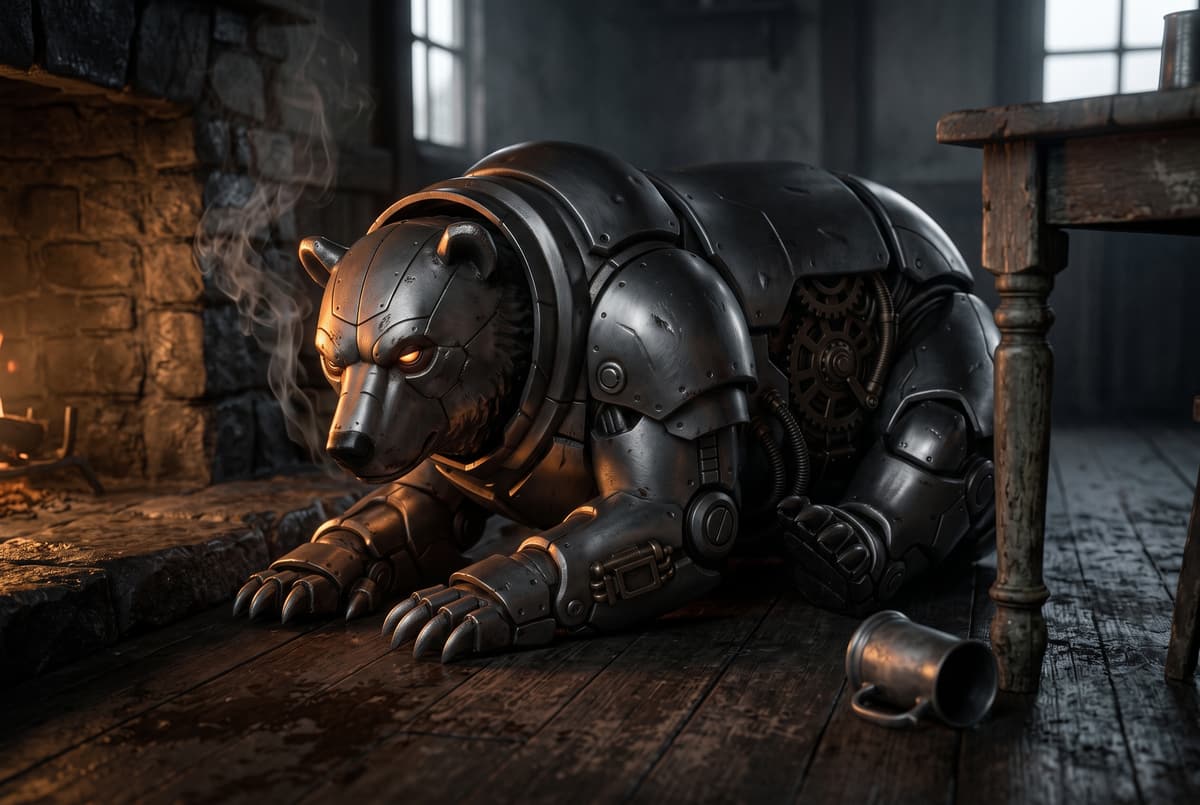
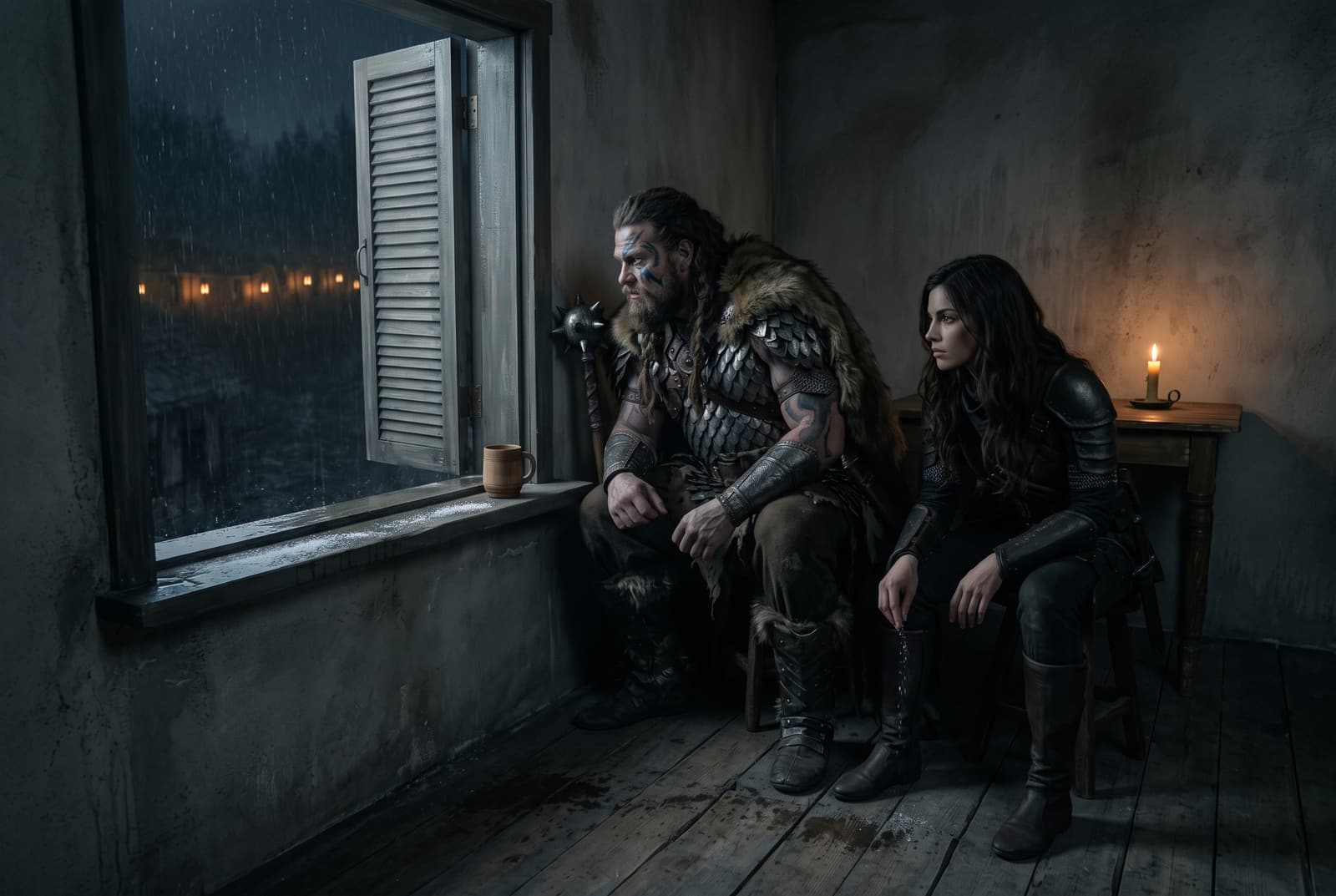
They kept watch that night rather than sleep through it, and Karrowmoor gave them a small, ugly taste of why the custom exists. Laughter drifted in from somewhere past the treeline, too even to be a conversation. Once, briefly, a shape crossed a window of torchlight on the road below and was gone before anyone could say what it had been wearing. Nothing knocked. Nothing needed to.
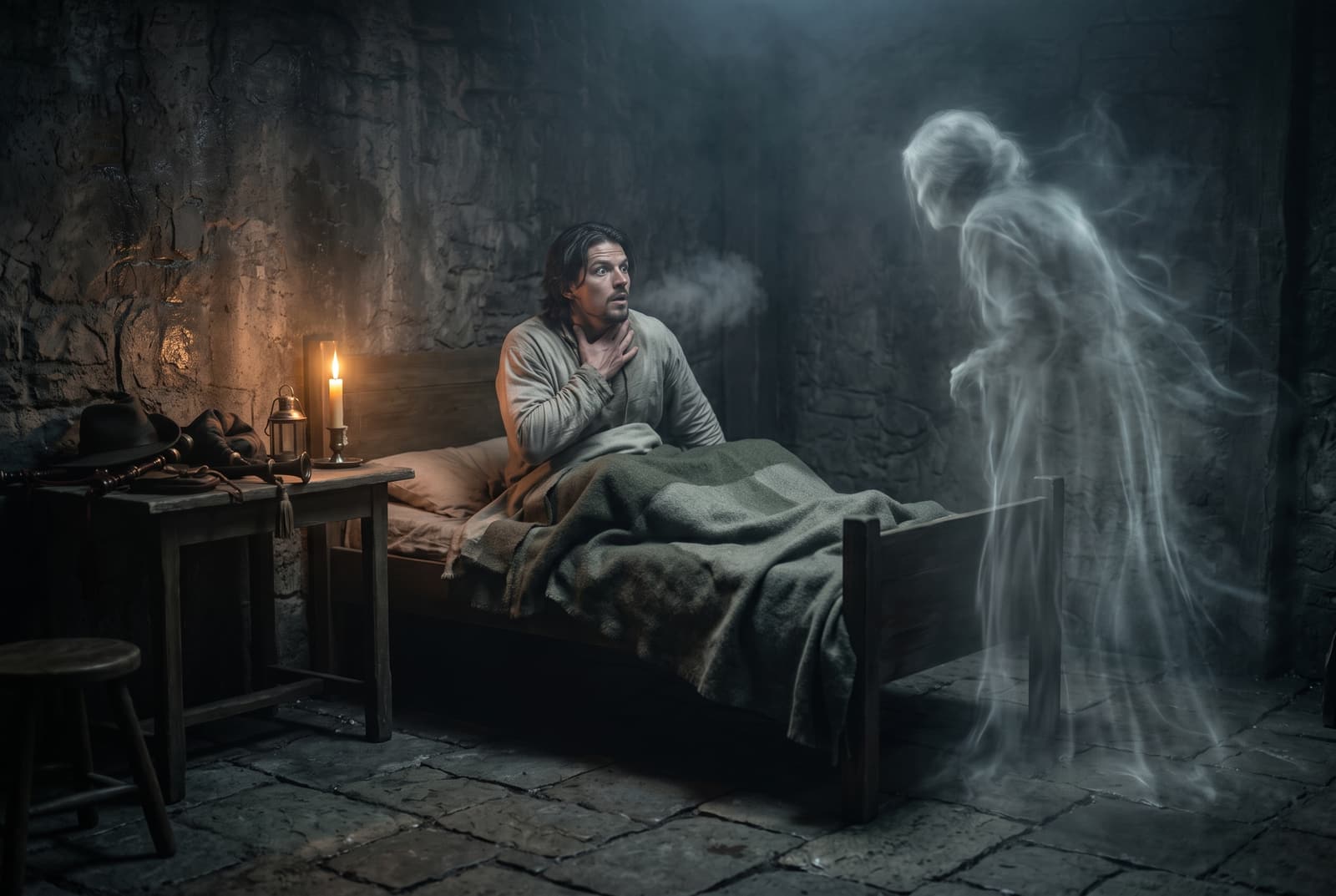
Later, past midnight, Edric woke to find Salah standing at the foot of his bed, her concern plain on her face before she said a word — she'd come to warn him what she'd heard breathing at his ear in the dream that had just released him: Edric, I know where you are.
By morning the road to the hideout felt less like an errand and more like the only door left to try.
They found it exactly where Yorrick had placed it — a rough camp holding more people than the miller's fear had let on. Edric went up to it under a borrowed name, Derek, with Makani a step behind him playing the part of hired muscle keeping him safe — a courier and his bodyguard, nothing stranger than that. The story was simple enough to hold: word, from the people paying for the mill's silence, that it was running again regardless. It worked better than expected. The woman who answered the door — hard‑faced, plainly in charge — didn't so much let them in as pull them in, already halfway to panic, already talking about which of her people had failed which task, the blame curdling fast toward talk of finding the miller and breaking both his legs for whatever he'd let slip.
That was as far as the ruse needed to go. Back outside, with the rest of the party already in position, Makani moved first — a fistful of salt into the woman's eyes, and the fight was decided before it started.
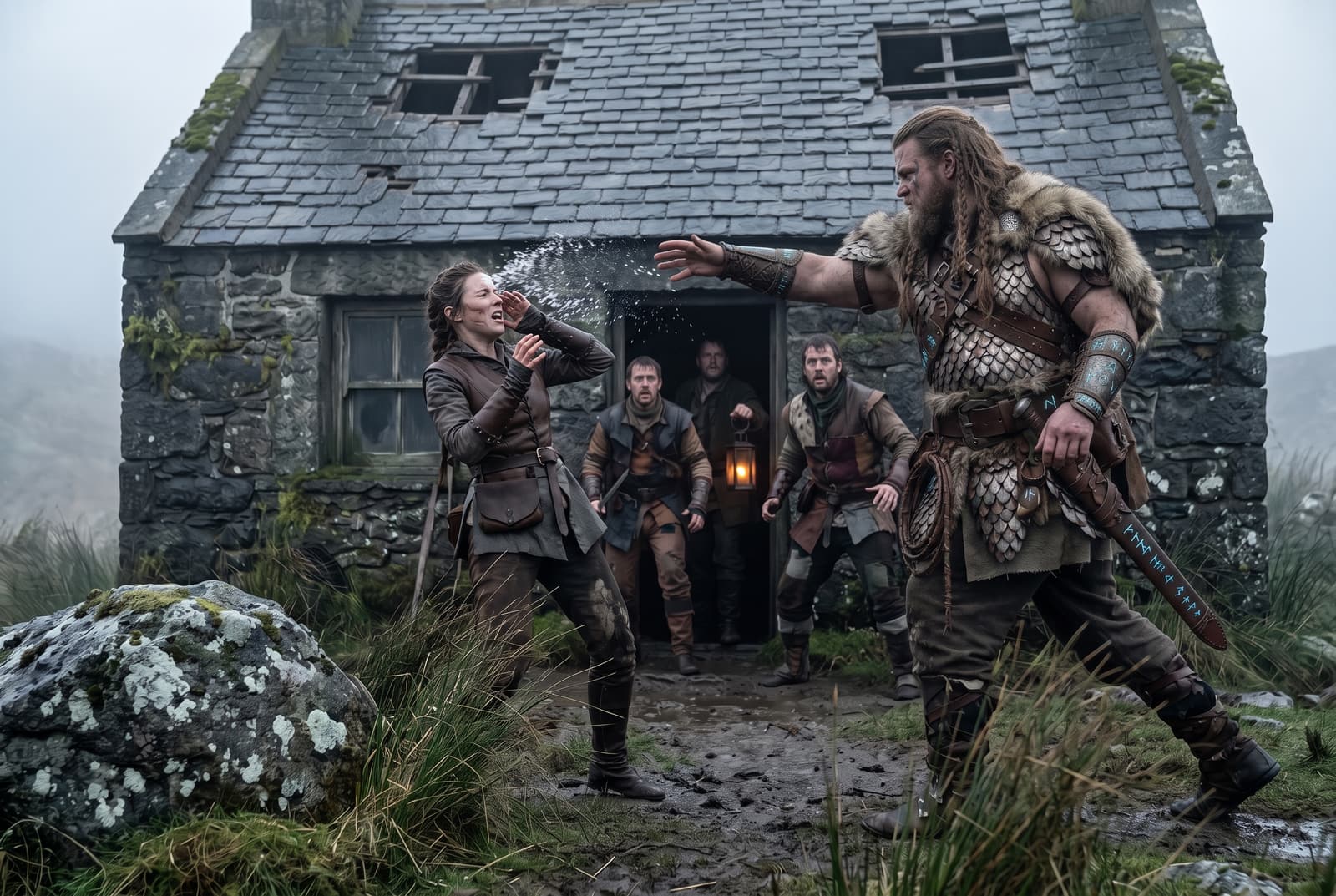
It went badly for the hideout in every way that mattered. Makani's morning star opened one bandit nearly in half before the man had finished drawing a weapon of his own. Orion's warhammer found a second in that same opening rush, and later his thorn‑wreathed whip caught a third, hauling him off balance before he could clear his blade. Edric goaded a fourth into a shouting match that cost him the fight without a single blow landing. Bruin waded through what was left while Makani fed the bear his own battle‑fury as freely as he spent it on himself, and took a blow from the crew's captain hard enough to have ended the fight early if a lifetime spent in stone giant country hadn't taught his body how to shrug weight like that off. Through all of it, the hard‑faced woman tried to run, and couldn't — Zara had put an arrow through each of her knees on principle, the same principle that kept the party's blades pulling their killing edges the whole fight. She went down alive because they'd decided, out loud, before the first arrow flew, that she would.
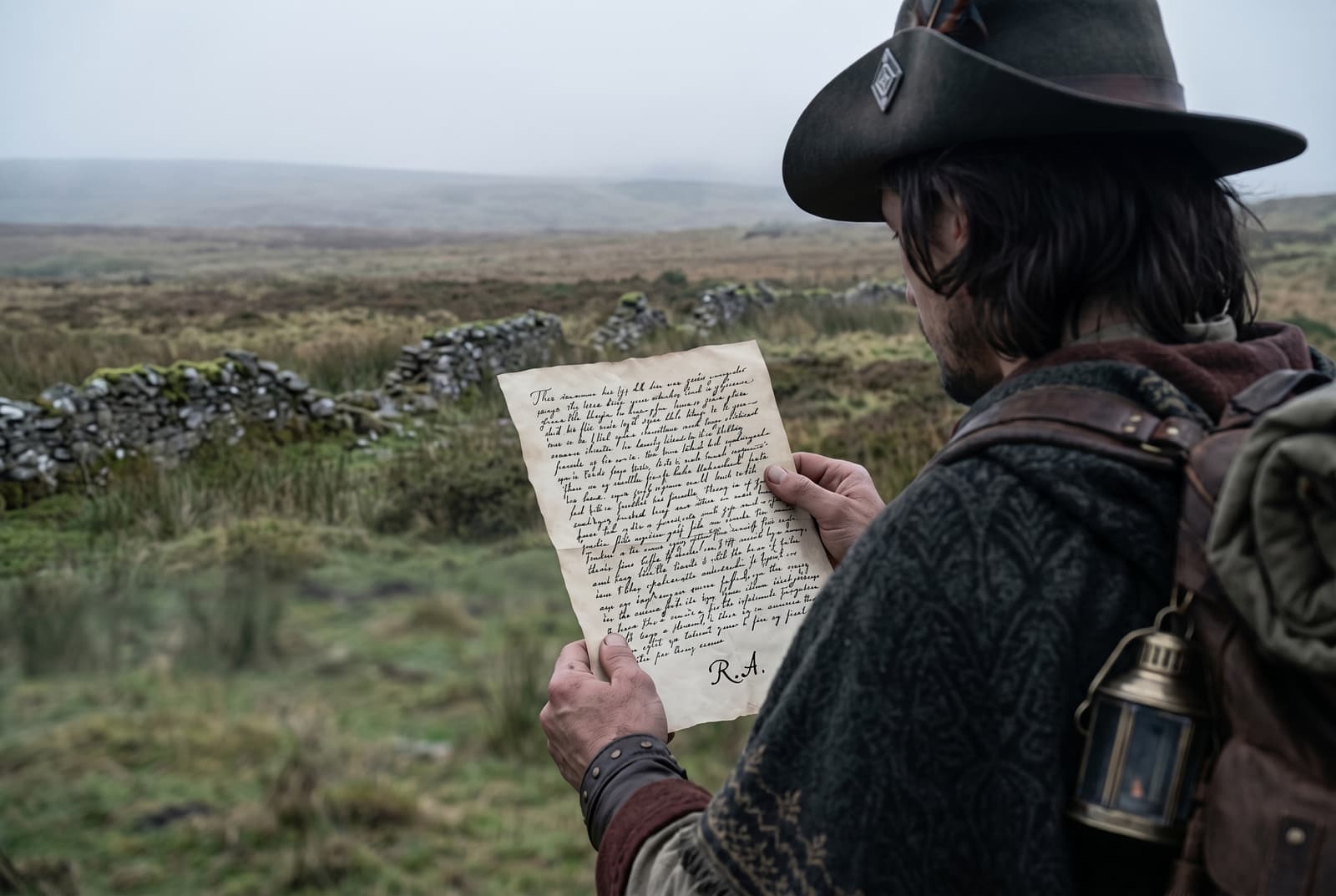
She gave her name as Ursuline once there was no more use pretending she hadn't been caught. Bled down onto the dirt of her own camp, she talked fast and talked true, or true enough — though there wasn't much truth in her to give. She had no face to put to any of it, no real sense of who she'd been working for, nothing beyond what she called them herself, with a shrug, as if the name meant nothing because it didn't: the night boys. Men who came after dark, she said, paid well for narrow, specific jobs, and never once explained themselves — and she'd never once thought to ask. The job on the Old Mill had come with unusually precise terms anyway: stop it working, don't burn it, don't kill anyone, don't make it look deliberate. Payment had come in coin, and twice now in something rarer — a sliver of Clear Light, proof enough that whoever was behind her employer's visits could get their hands on it easily. The written terms of the job were still among her things when the party searched the camp — a single page, precise about what could and couldn't happen to the mill, signed at the bottom with two initials and nothing else: R.A. Nobody at that table had ever heard the letters mean anything, and Ursuline, when asked, swore just as fast that she hadn't either.
There wasn't time left in the day to march a wounded prisoner all the way back to Grayvault and put the question of her fate to Ilsabet directly, and the party argued the point back and forth without settling it — bind her and bring her, or something else, nobody was quite ready to say out loud. What the hideout still held went into their packs regardless: three hundred and sixty gold, the balance of whatever price had bought the mill's silence, which Zara refused outright to touch, unwilling to carry payment for a job meant to starve a town; a morning star touched by moonlight, handed to Makani as the only one who'd get real use from it; and a small bottle of perfume that did nothing but make its wearer harder to say no to for the better part of an hour, claimed for whatever conversation with the valley's less careful men it might someday make easier.
They had Ursuline's own word for the ones giving the orders now — the night boys, whatever that was worth — and a name for the woman who'd taken their coin, and two letters signed to nothing anyone recognized. It was more than they'd had that morning. It wasn't enough to know who was pulling anything.
Open Threads
- “The night boys” — not a confirmed name, just Ursuline's own casual term for the shadowy men who pay for jobs like this one. Tied to both the Old Mill sabotage and Yorrick's bribe by payment and method, not by any real knowledge of who they are.
- The written order signed “R.A.” — found on Ursuline, specifying exactly how the mill was to be disabled. Initials unrecognized by anyone present.
- Ursuline — captured, wounded, her fate undecided. The party argued over what to do with her and reached no answer before the chapter closed.
- Ysolde Karn — now known by name: a kindly old healer, per Wendell, living alone in the woods by a stream past Seamfall, only called “the Witch” by the valley's young folk. Wendell caught himself sounding faintly uneasy about how long she's supposedly been out there. Not yet met.
- The retaining wall in Thornhallow — a sinkhole beneath it has already defeated one repair by a dwarven mason's crew. Mentioned in passing, nothing more. Still unvisited.
- Emeric Sauvane — a name Wendell gave up first, pointing Orion toward him as the one to ask about magic items or fine goods; Leon's bragging about a bottle from Sauvane Vineyards that evening put a second name to the same man. A wealthy, well‑regarded vintner, and worth remembering. Not yet met.
Dramatis Personae
Ursuline — captured this session, wounded and talking; no portrait drawn yet.
Named, not yet met: “the night boys” · Ysolde Karn (the Witch) · Emeric Sauvane