The inn at Undersluice was a way station, and it made no pretence of being anything else. Three floors on the Ring Road: a tavern on the ground floor, a communal bath at one end of the upper landings, a luxury suite at the other that Marcus had claimed without anyone’s permission, and between them a long run of plain rooms, each one four walls, a bed and a place to put your things. The party had taken three of them on the third floor. It rained, as it always rained. By late evening the whole house had gone quiet.
Edric and Makani woke to a shape in the corner of their room.
The door stood open on a slice of lamplight, and against it they could make out a figure and no more: a distorted face, a stilted, jerking way of moving, as though it were learning to walk for the first time. One arm came up and pointed at Edric, and the thing began to speak, and the speaking grew louder as it went.
Give me the book. What have you done with it? What do you have?
Edric did not need to see it to know something was badly wrong. The spirits that travelled with him were beating against whatever wall holds them back, frightened out of their ordinary manners, a swarm he could feel and nobody else could see. He called Sela to him and, in a pleading voice, asked Makani whether he saw this, or whether this was another nightmare.
Makani saw it. He also saw no reason to wait. He swung the greatclub into the thing’s face, and it went down like a sack. It had not tried to dodge. It had not tried to do anything. It lay on the boards and was silent.
When Makani crouched over it, it turned out to be a man in his nightclothes, with a great wound in his head. Nothing about him seemed amiss.
Doors had opened along the passage by then, and people were gathering in them. The young woman who had met the party at the inn door that evening pushed her way to the front. She no longer wore the red thread at her wrist or the crossed-hands pendant of Ilmater at her throat, and no one thought that strange. What was that? Are you hurt? Who is this?
A thief, said Edric, with great firmness.
A thief? In his nightclothes? Somebody in the crowd had caught the word. He was shouting about a book. And then the young woman, closer than the rest and with her eyes on all of them: What book? Who would break into your room for a book? Are we in danger?
Grave danger, I’m afraid, said Makani, who was not helping.
It was Marcus who told them what sort of book. He had come out of his room dragging a small stuffed likeness of Lathander by one arm and had taken in the scene in a moment. The Tome of the Morning, he said, in the voice of a man delivering terrible news, and the crowd, which knew the name, drew a collective breath. The dead man could not even read, someone pointed out. Then we are dealing with a madman, said Marcus. Zara put her head round her door, observed that the man had broken in and shouted at people for something they didn’t have, and told the passage to go back to bed.
They were dealing with Warrick. One of the men in the passage knew him: a farmer, he said, who had had dinner in the tavern that night and was lodging a few doors down, an honest man who had travelled this road with him for years. He did not know why the man had been in a stranger’s room and did not know why anyone would kill him for it. Makani took hold of him by the shirt to ask whether he had been in on it. He had not.
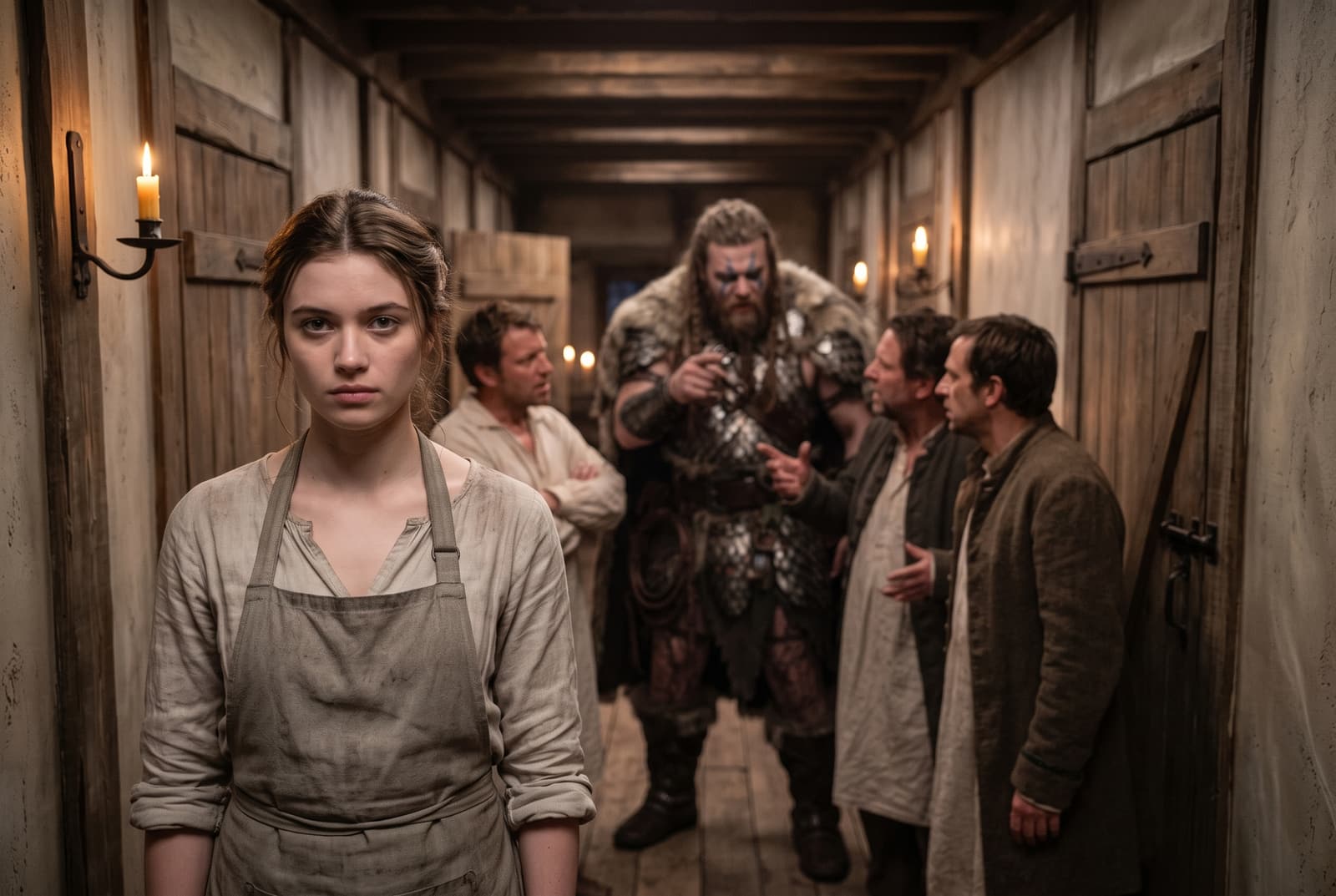
Take me to this man’s room, said Makani. There must be clues.
The young woman came along. On the way she asked, in the most natural voice in the world, which of them had the book, and how she was to know that nobody else would come for it. Nobody wondered that she should be so anxious to know.
There seemed to be nothing. Warrick’s room was bare. His travelling clothes lay heaped on the bed, salt on the windowsill as the country demanded, and no letters, no papers, no book. The door stood a little ajar, as if it had simply been left that way, and Makani, who was looking everywhere but at it, never saw that the frame had been forced open from the passage side. Warrick’s own door had been broken in, from the outside, before ever he walked out of it.
Behind them, the guests pointed at the lock on the party’s own door, and it was an ugly thing to look at. It was iron, and it had held. Something had taken hold of the plate and bent it and drawn it out of the frame. That’s a strong man’s work, said one of them, and Warrick never did it. Nobody asked what sort of man could tear iron from a door frame, only whether this one had.
Edric, left alone with his spirits for a moment, asked how a bard might speak to one of them when the room might be listening, and asked it aloud by mistake. He had his answer anyway. What the spirits told him left him pale as a sheet: the party was in danger, of that he was certain, but from where, he could not tell. Outside, his companions saw his face and heard him muttering to himself, looked at one another, and agreed that poor Edric needed sleep.
The trouble was a stern, tired man who wanted the inn locked down until a man could be sent for from the Assize, to inspect, and who looked at the big man with the club and said what everyone else was thinking. Somebody ought to find out whether there was a murderer in the house.
Makani, for his part, had asked the young woman for a fresh room, since theirs no longer had a working lock. She tried the first door she came to and found it fastened, and apologised, and tried another. That one opened. It did not strike anyone as odd that a girl who worked in the house should have to fumble among its doors to find one that was empty.
Marcus went to put on a costume.
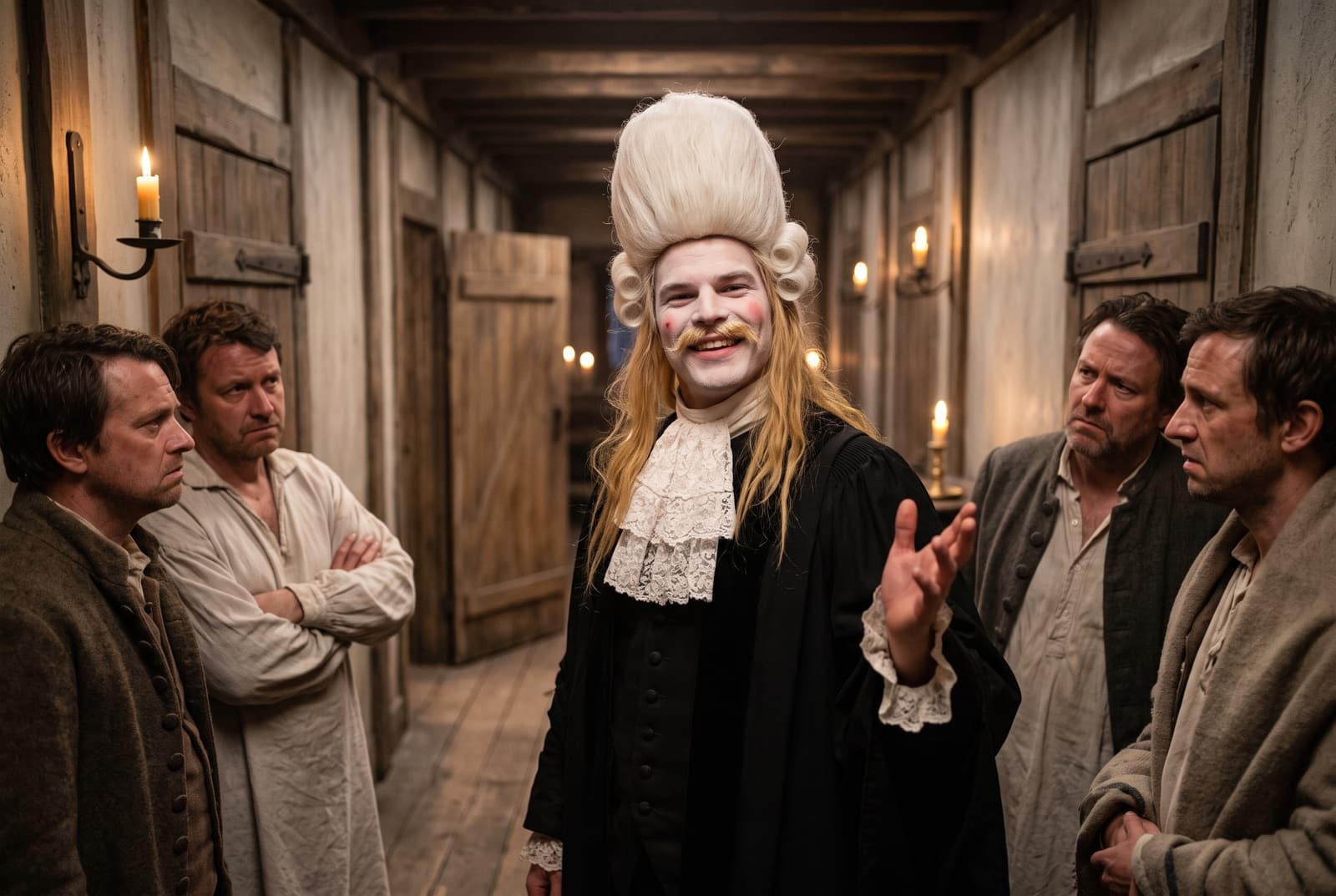
He had it in his pack: the coat and the bearing of a magistrate, and for a moustache a good inch of his own long hair, cut off for the purpose and fixed to his lip. When he came back along the passage in it, the stern man was the first to look up. Sir. You’ve heard the commotion. This giant has murdered a man.
Show me this murdered man, said the magistrate.
He knelt by the body for as long as it took to look wise. A farmer, by the look of his hands, he said. Drunk, and he fell into the door, and he broke his neck, and he broke the lock off the door on the way down. I see it all the time in these parts. Put salt on your windows. Burn the body. A few in the crowd murmured. A few more shrugged. The stern man, who had wanted a magistrate, seemed to accept what one told him, and sent for a bedsheet and a boy to help carry the dead.
Makani went with them, to show his good faith, and to look for shovels.
Downstairs, in the tavern, Edric had found the young woman from the inn door, who had lit a lantern for him and gone to fetch something to drink. She came back with a couple of pints and leaned in close. She knew what the magistrate had said, she told him, but she couldn’t shake the feeling that something was wrong, and she wanted to know what had happened in that room.
I am terribly shaken, Edric said, and the only cure I know is the strongest liquor you have, and sleep, immediately. He had thanked the crying god, in passing, that a magistrate was here, and the young woman, who ought to have had something to say to that, let it go by without a word. He did not notice that she had. When Marcus came stumbling down the stairs to find him, still saying how handsome the magistrate was, she went to fetch the strongest bottle in the house, and Edric drank it.
Out behind the inn, in a work shed beside the building, Makani found the shovels, and next to them a big burlap sack, its bottom dark and wet.
There was a young woman inside. Her face and throat had been clawed to ruin. She wore a necklace, and on her wrist a red string, and Makani had the strangest feeling he had seen her before.
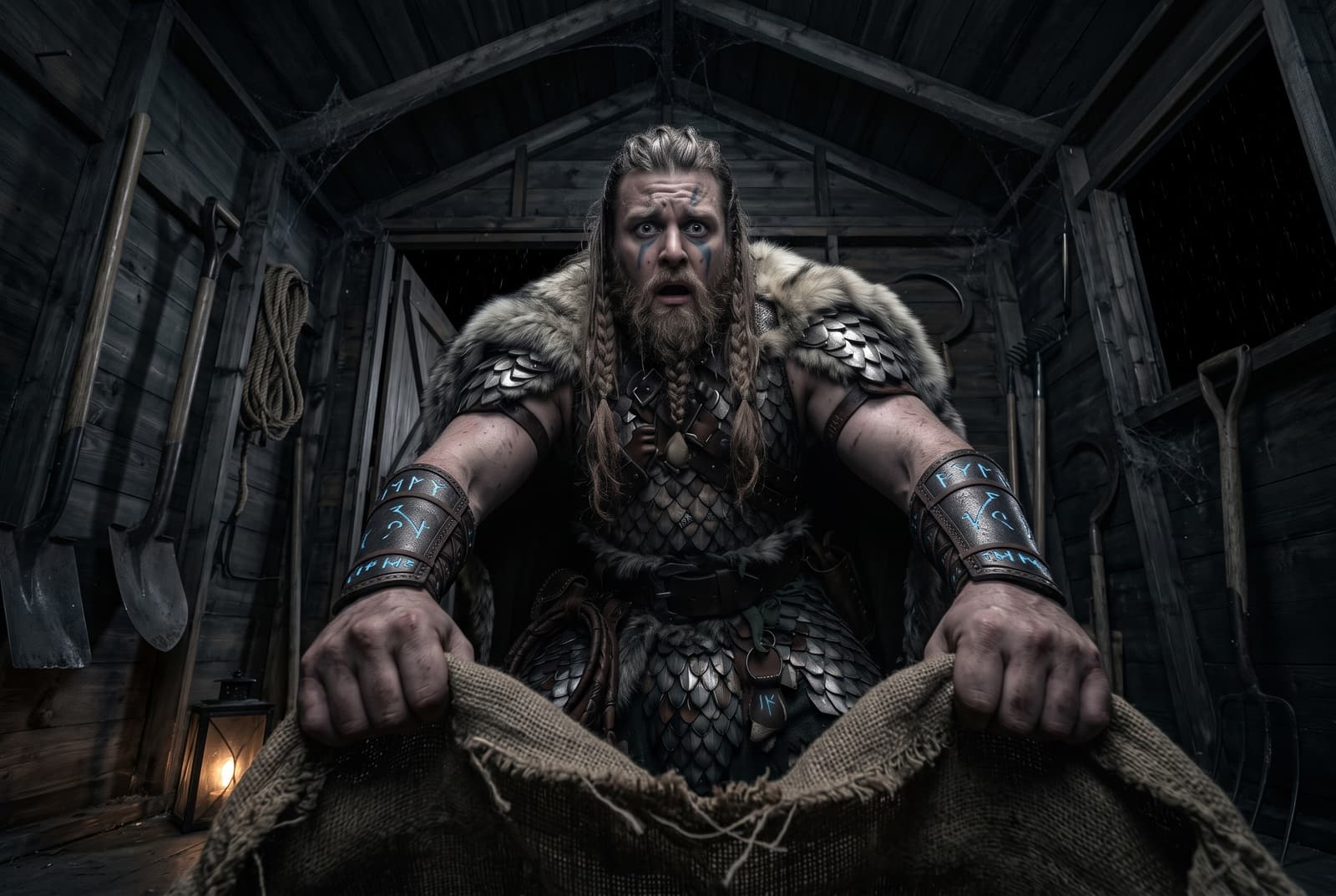
He dropped what he was holding and ran.
Marcus felt the drowsiness first as a pleasant weight, and thought only that he really must go to bed. Then he looked round, and Edric had slid out of his chair and lay on the floor, as completely gone as a man can be. And the young woman from the inn door, who had been all kindness an hour before, was looking squarely at him with no warmth at all in her face.
I don’t need you, she said. Leave.
Marcus did not think of her as a threat. He told her no.
She began to grow. She rose until she stood a head above him. The colour went out of her skin, and what was left was grey and old, old as a stone step, and her hands lengthened into great claws, and her eyes sank back and took on a blue light. At her waist, hovering where no belt could have held it, was a book, a fairly new-looking one.
I’ve warned you, she said. Leave.
Makani put his shoulder to the door and came through it. He saw Edric on the floor, and he saw the thing standing over Marcus, and he did not ask questions. He swung at once. The claws were quicker than the club. One swipe went wide; the second laid Marcus open, deep, from shoulder to ribs. She looked at Makani, and at Marcus, and last at Edric, asleep on the boards. And then she was not there.
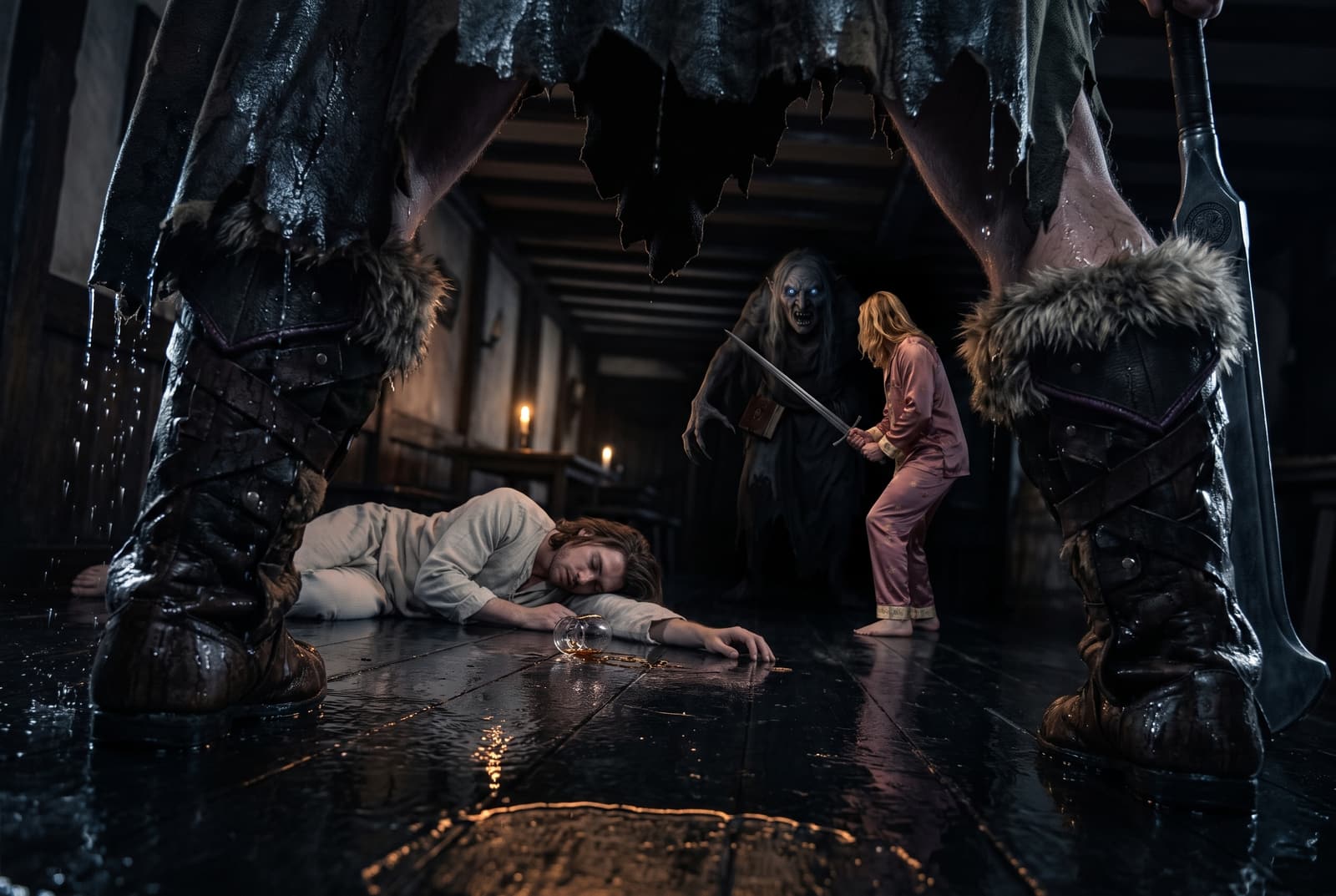
Makani’s club broke the floor where she had stood. The room had gone very cold.
They did not move Edric far. Makani carried him upstairs like a child and put him in a bed and woke him with his own big hands, and Edric came round slowly, stupidly, remembering a drink with Marcus and nothing else.
A possessed man came into our room and screamed at us for a book, Makani told him. Then I found the girl from the inn dead in a shed. And the one who was being her was a spirit, and she blinked out of existence in front of me.
Edric sat on the edge of the bed for a while. Then he told him.
Some years ago, on his travels, he had found a book in one of those little old shrines off the road with skulls set about them. He couldn’t read most of it. There were musical notes in it, though, and he had worked out how to play them, and ever since he had been able to talk to the dead. That was the useful part. The rest was that after a time he began to hear very frightening things, and in a fright he destroyed the book. And there is something out there, he said, that does not know I’ve done it, and is keen on getting it back.
Makani took that in the way a goliath takes things in, which is slowly and completely. What should we tell the others? he asked. Edric would rather he kept it for now. Makani said, plainly, that the telling was not his to do. If the others kept travelling with them, Edric would have to.
The morning was a sober one. Somebody had found the dead girl in the shed and was saying so in the passage, and the people who had asked for a magistrate were now vouching for the big man, since whatever had happened to her, he had been in the room with them at the time. Nobody accused the party of it. There was bread and cured meat laid out in the tavern, and no one to serve it.
Marcus sat down across from Edric and asked what in the hell that was, last night. Edric said he had slept like a stone. Marcus said that whatever it was had tried to take him captive, and that this man was wanted by it. Zara, who knew nothing about any of that, observed that Edric looked well rested, and was happy for him. Orion, who had slept through all of it with Bruin snoring beside him, looked hard at Marcus’s face and asked what was stuck to it. It was moustache.
A man came to their table whom Edric knew by his coat: Vessen, who spoke for Lord Vosk. He had heard there was trouble, he said, and that a magistrate had passed through, and he had been hoping to find the magistrate, who seemed to have left early. Instead he asked, once more, whether the party meant to take up Lord Vosk’s offer, and speak for the Dowager. They did. The place was Vosk’s Hold, in Old Ash. He would see them there, and make the introductions himself. Then he left, and Marcus said that he’d been thinking of changing into the costume and talking to him, and that it was probably as well they hadn’t wanted him to.
They spread the map on the table. Undersluice lay in the valley of Bellwater. Farthingholt lay in Sallow End, a good way off, and Old Ash was way the hell over there. The carriage could cover the first stretch in a day. Gilli, who had said little all morning, wanted the Priory, which was in Sallow End as well. Edric wanted Farthingholt, which was in Sallow End. There was talk of the old mines, and Zara reminded them what had come out of the cave at Thornhollow, and what it had cost to wall it up, and Thaddeus, who had not come back out. They poured one out for him. They would not go into any caves. They would go to Sallow End.
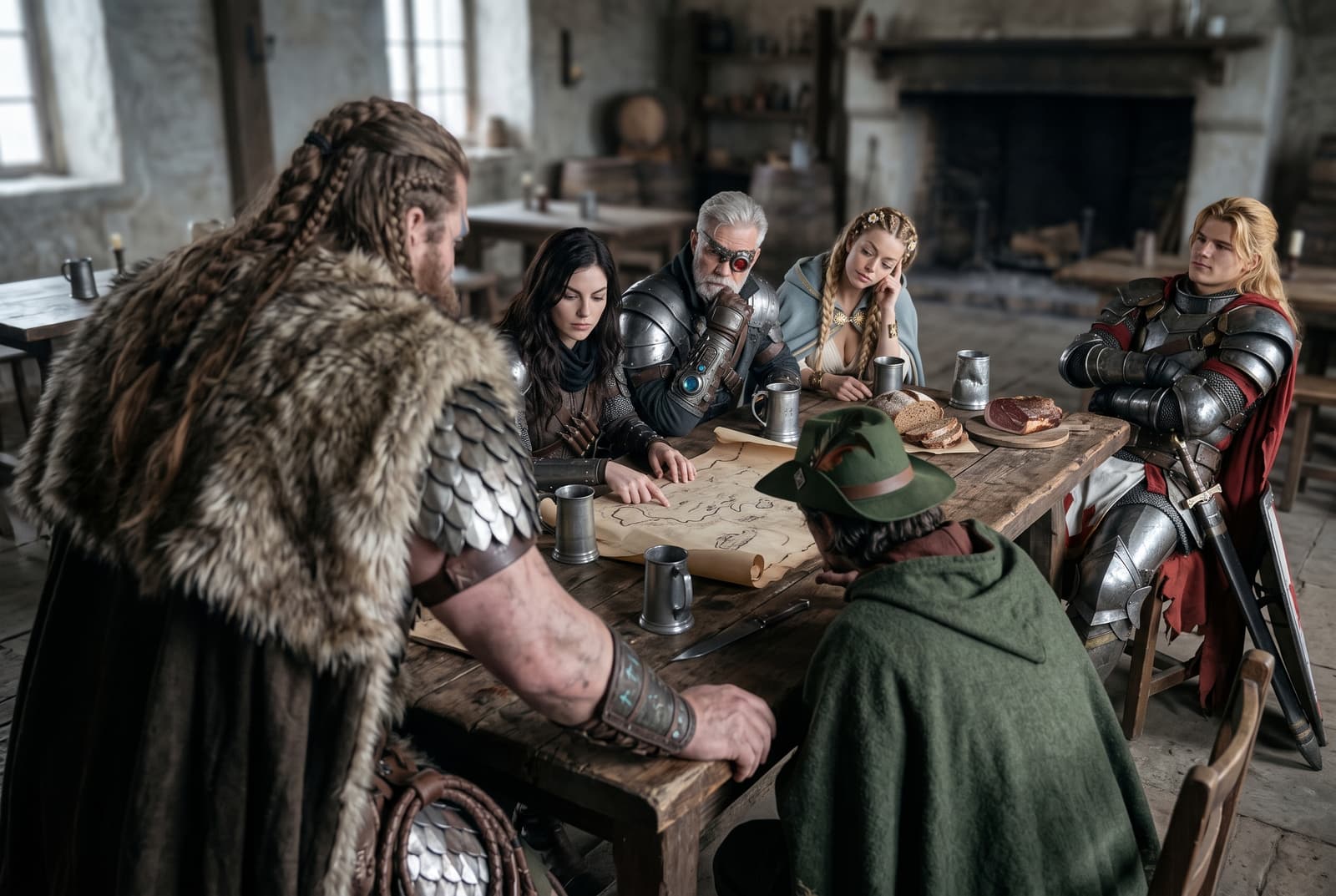
Marcus said, If we have to kill anybody else, take some of their hair. I’m not cutting mine anymore. Makani said it was a strange thing to be asked, but all right.
They fetched the carriage. The old man who had promised to see to it had done so. It was cleaned, the horses fed, and it was still a very old carriage, but it was sound. They took the road out of Undersluice and onto the Ring Road, past Cold Pass, toward Shalegate and the forest beyond, where the road ran close under the trees, and the woods were deeper and darker than any they had passed.
They felt no danger in it, but they weren’t alone. Every so often one of them would glance out and see, between the trunks, the shape of a large wolf keeping pace with the carriage. It would be there for a few seconds and then not. Minutes later, it would be there again. And presently another, on the far side of the road, did the same.
It was curious, not yet a threat. The carriage rolled on between Shalegate and Tallowbridge Inn, with the wolves at its wheels under the flat grey light.
Open Threads
- The thing that wears faces — it posed as a young woman from the inn, drugged Edric and Marcus, warned them to leave, and left Marcus badly hurt before vanishing. It wanted a book. It is not gone.
- The book — Edric destroyed it. The thing apparently does not know that. Makani knows; the rest of the party does not.
- The dead girl in the shed — the young woman from the inn door. Nobody blames the party.
- Warrick — killed by Makani in the dark. An honest man, by every account, who did not know what he was doing. Whoever sent him is not named.
- The forced doors — the party’s iron lock, bent and drawn from the frame by hands stronger than the dead man’s, and Warrick’s own door, broken in from the passage side before he ever left his room.
- Lord Vosk’s invitation — Vosk’s Hold, Old Ash. Vessen will meet them there.
- Sallow End — Farthingholt (Edric) and the Priory (Gilli). The party voted to go.
- Wolves on the Ring Road — keeping pace with the carriage, on both sides.
Dramatis Personae
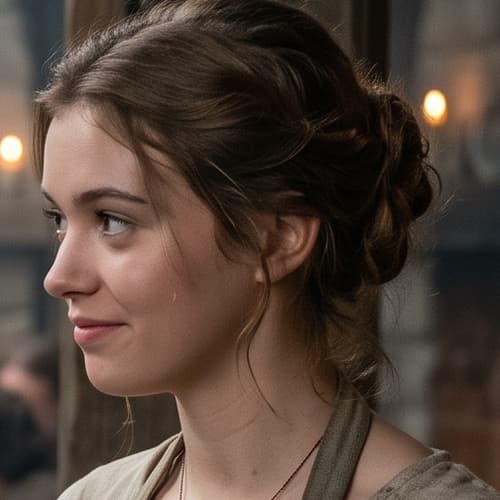
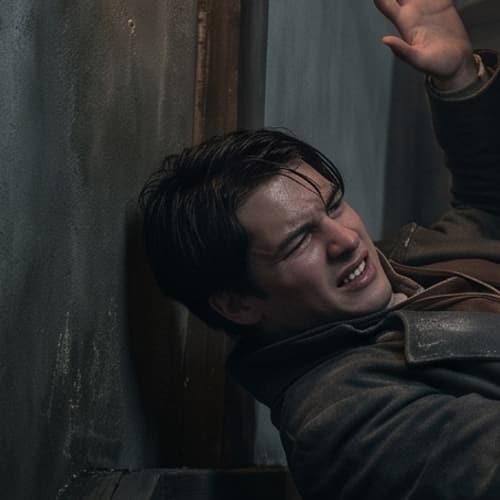
Also met: Warrick, a farmer of the road, killed in the dark; a stern guest who asked for the Assize, and his boy; and the old man who cared for the carriage.
Named, not yet met: Lord Vosk of Old Ash; Prior Anselm, of the Priory in Sallow End.